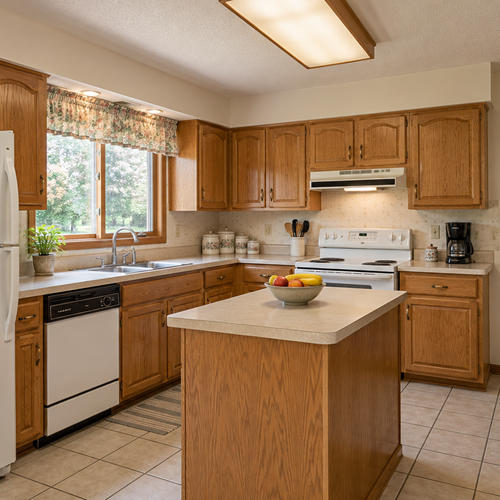



Usually, no big remodel is needed. The best returns come from paint, better lighting, small repairs, and a light kitchen refresh. Full gut rehabs rarely earn their money back by closing. Check your home against nearby listings first, then spend only where buyers will notice.
Should You Renovate Before Selling in Chicago?
Most of the time, you don't need a big remodel. When you renovate before selling in Chicago, the best returns come from small, low-cost work: paint, better lighting, small repairs, and a light kitchen refresh. Full gut rehabs rarely earn their money back by closing, so they only make sense when your home truly can't compete without one.
Key Takeaways
- In recent local market data, median days on market ran from 46 in Lincoln Park to 59 in Rogers Park, so a home that looks tired can sit while buyers pick the cleaner one.
- Fixing visible problems, like worn paint, bad lighting, and broken fixtures, is the safest first spend before listing.
- National 2026 summaries show major kitchen remodels, whole-home remodels, and additions recover much less of their cost than small, targeted projects.
- A light kitchen refresh can make sense, but moving walls, plumbing, or the layout rarely pays off before a sale.
- Chicago condos, two-flats, and older bungalows each call for a different level of prep, so one "renovate everything" plan doesn't fit.
I get this question from nearly every seller I meet. Here's the one I ask back: will this change how buyers see the home enough to justify the money, effort, or delay?
That's a much better question than "what should we update?" I don't believe every seller needs a renovation project before listing. I also don't believe every dollar you spend comes back dollar for dollar.
What Pays Off If You Renovate Before Selling in Chicago?
The projects that pay off are the small ones that fix what buyers see and feel in the first few minutes. Think condition, not custom design. Here's the order I'd work in.
Do the visible fixes first
Start with deferred maintenance and safety issues. These are the things buyers notice right away, and they make buyers wonder what else was ignored.
- Leaking faucets and running toilets
- Cracked or stained ceilings and walls
- Doors that stick, loose railings, and broken outlets or switch plates
- Damaged floors or trim
These fixes are not exciting. They work because a home that feels cared for feels safe to buy.
Is painting worth it before selling a Chicago home?
Yes, paint is one of the best places to spend. Fresh paint in calm, broadly liked colors makes rooms look clean, bright, and bigger.
Repaint rooms that are worn, scuffed, or very bold. If a room is in good shape and the color is neutral, leave it alone. That's the kind of call I make with sellers walking room by room: touch this up, leave that alone, don't bother spending on the other thing.
Why do lighting and fixtures matter so much?
Lighting changes how a room looks in photos and in person. Many older Chicago homes have dim rooms, mismatched bulbs, and dated or damaged fixtures.
- Swap broken or very dated fixtures
- Use the same bulb color in every room
- Add a lamp where a room feels dark
- Replace scratched or loose cabinet pulls and door hardware
Photos are how most buyers meet your home. Bright, even rooms show better online.
Should you refresh the kitchen or sell it as is?
Refresh it lightly if it's clearly worse than the homes you're competing with. Leave it alone if it's clean, working, and just not new.
A light refresh keeps the layout the same. That can mean:
- Deep cleaning, including grout, hood, and appliance fronts
- Painting cabinets or walls
- New hardware and a better light fixture
- Replacing a worn faucet or a damaged sink or counter piece
I walk through more of these in my list of top renos that can help a sale price. Your own list will be shorter than that one, because it depends on your home and your competition.
Declutter and clean before anything else
Staging exists to help buyers understand the house quickly and emotionally. Sometimes that means removing things. Sometimes it means rearranging. Sometimes it means changing paint. And sometimes it means doing almost nothing.
Deep cleaning and decluttering cost the least of anything on this list. They also change how a room feels right away.
What Usually Does Not Pay Off Before You List?
Big, expensive projects usually don't pay off before a sale. A large project can make a home show better and still not earn back what you spent.
Are full gut renovations worth it before selling?
Usually not. National 2026 summaries of cost versus value report much weaker cost recovery for major kitchen remodels, whole-home remodels, and additions than for smaller, targeted improvements. Those numbers are national, not Chicago-specific. Still, the pattern matches what I see: the bigger the job, the harder it is to get the money back at closing.
Big jobs also take time. Time means more months of mortgage, taxes, and utilities while your home isn't on the market. If you want a closer look at the money side of selling, my breakdown of what it really costs to sell a house in Chicago covers the cost categories.
What about layout changes, additions, and luxury finishes?
Skip them in most cases. Moving walls, adding space, or picking high-end finishes can run long and go over budget. Worse, your taste may not match the next buyer's.
There's a second risk. If you put in finishes far above the blocks around you, buyers may not pay for them. I tell sellers not to over-improve for the neighborhood. The home still gets compared to what sits nearby.
Where do exterior projects fit?
Some exterior work looks stronger than interior work. The same 2026 national summaries rank projects like garage-door replacement and entry-door replacement among the best at recovering cost. That's directional, not a Chicago formula. But a tired front door or garage door is easy to spot from the street, so it's worth a look.
How Do You Decide What to Do for Your Home?
Sort every project into three buckets: do it, consider it, or skip it. Then test each one against the homes buyers will compare yours to.
The simple three-bucket test
- Do it: visible defects, deferred maintenance, poor lighting, damaged surfaces, worn paint, and cheap presentation problems.
- Consider it: a restrained kitchen or bathroom refresh, but only if your home is clearly below competing listings and the work can finish on schedule.
- Usually skip it: full gut rehabs, additions, luxury finishes, layout changes, and very personal design choices. The exception is when nearby listings show your home can't compete without them.
Why does your type of home change the answer?
A city condo, a vintage two-flat, and an older bungalow each need a different plan. Buyers may value original details, a workable layout, storage, parking, outdoor space, and building condition differently depending on the property. For a condo, buyers also look at the building, not just your unit, and paint can't fix that.
Micro-location matters here too. Two homes that look the same on paper can sell very differently because of the block, the noise, the housing stock, or the floor plan. I can't hand you a renovation premium by neighborhood. That takes a real look at current comparable sales and active listings.
What does the local market say?
Here's recent local market data for several areas I work in. These are area-wide medians, not a prediction for your home. Your home's value depends on its condition, street, build year, and timing.
| Area | Median Sale Price | Median Days on Market |
|---|---|---|
| Rogers Park | $265,000 | 59 |
| Edgewater | $315,000 | 53 |
| Lincoln Park | $785,000 | 46 |
| Lincoln Square | $739,780 | 57 |
| Ravenswood | $587,250 | 53 |
Across the wider Rogers Park market, 43 homes were actively for sale and 34 new listings came on in the last 30 days. That means buyers have choices. If your home feels worn next to the one down the street, they'll notice.
Whether to renovate before selling in Chicago is really a question about those choices. If you want help timing your sale against them, see my take on whether now is a good time to sell in Chicago.
How I turn this into a plan
I call my approach the Stress Less Move Method. It's built around your real life, not just a checklist. I look at your competition, tell you what to fix, what to touch up, and what to leave alone, then line up staging, vendors, photos, and launch timing.
I also think about the daily stuff. Where does the dog go during showings? What can be packed now without making life miserable? For a closer look at prep in a higher-priced area, here's how I approach preparing a Lincoln Park home for the highest sale.
Don't guess on a big spend. A short walk-through and a look at nearby listings can save you months of work and a lot of money.
Want to see what buyers think of your home? Read what past clients say on Google, Zillow, and Realtor.com.
FAQ
Should I renovate my Chicago home before putting it on the market?
Usually only lightly. Fix visible problems, repaint worn rooms, improve lighting, and clean well. Save big projects for cases where nearby listings show your home can't compete without them.
Which home improvements pay off most when selling in Chicago?
Small, low-cost work tends to pay off most: paint, lighting, small repairs, and deep cleaning. National 2026 summaries also show some exterior door projects recovering a lot of their cost. I can't give you a Chicago dollar return for any one project, so we check it against your competition first.
Do buyers in Chicago expect a move-in-ready home?
Many do, and a home that looks neglected can scare them off. Move-in ready doesn't mean new. It means clean, bright, working, and cared for. Buyers will often forgive older finishes if the home feels well kept.
Is a full gut renovation worth doing before selling?
Rarely. National 2026 data shows whole-home remodels and other high-cost projects recover far less of their cost than small ones. They also add time and carrying costs before you can list. It might make sense only if the home truly can't sell as it is, and I'd want to run the numbers with you first.
How long should I wait after renovating before listing my home?
There's no set waiting period I'd point to. List once the work is done, the home is clean, and the photos are taken. Listing with half-finished projects often hurts more than it helps.
Your Next Step
Most Chicago sellers do best with a short, smart to-do list, not a big remodel. Spend where buyers will notice, and leave the rest alone. I'll walk through your home with you, compare it to what you're up against, and tell you what's worth doing before you list.
Schedule a free no-obligation consult and we'll build your plan. Want a starting point on value? Get a free home valuation.
Equal Housing Opportunity. Stephanie Sullivan, Managing Broker License; RENE, SRS, and ABR designations. Regulated by the Illinois Department of Financial and Professional Regulation. This article is general information, not legal, tax, or financial advice. Confirm your own numbers with your closing agent, tax advisor, or lender.
Check out this article next