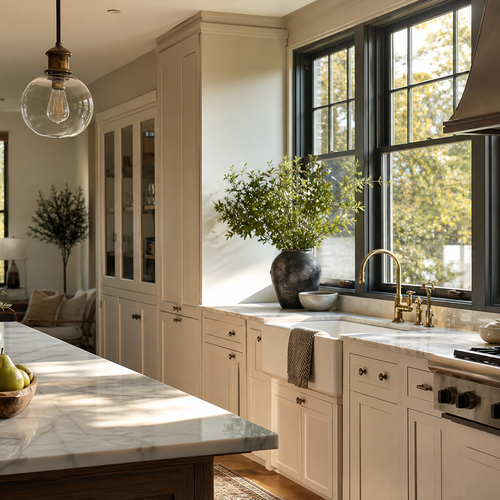


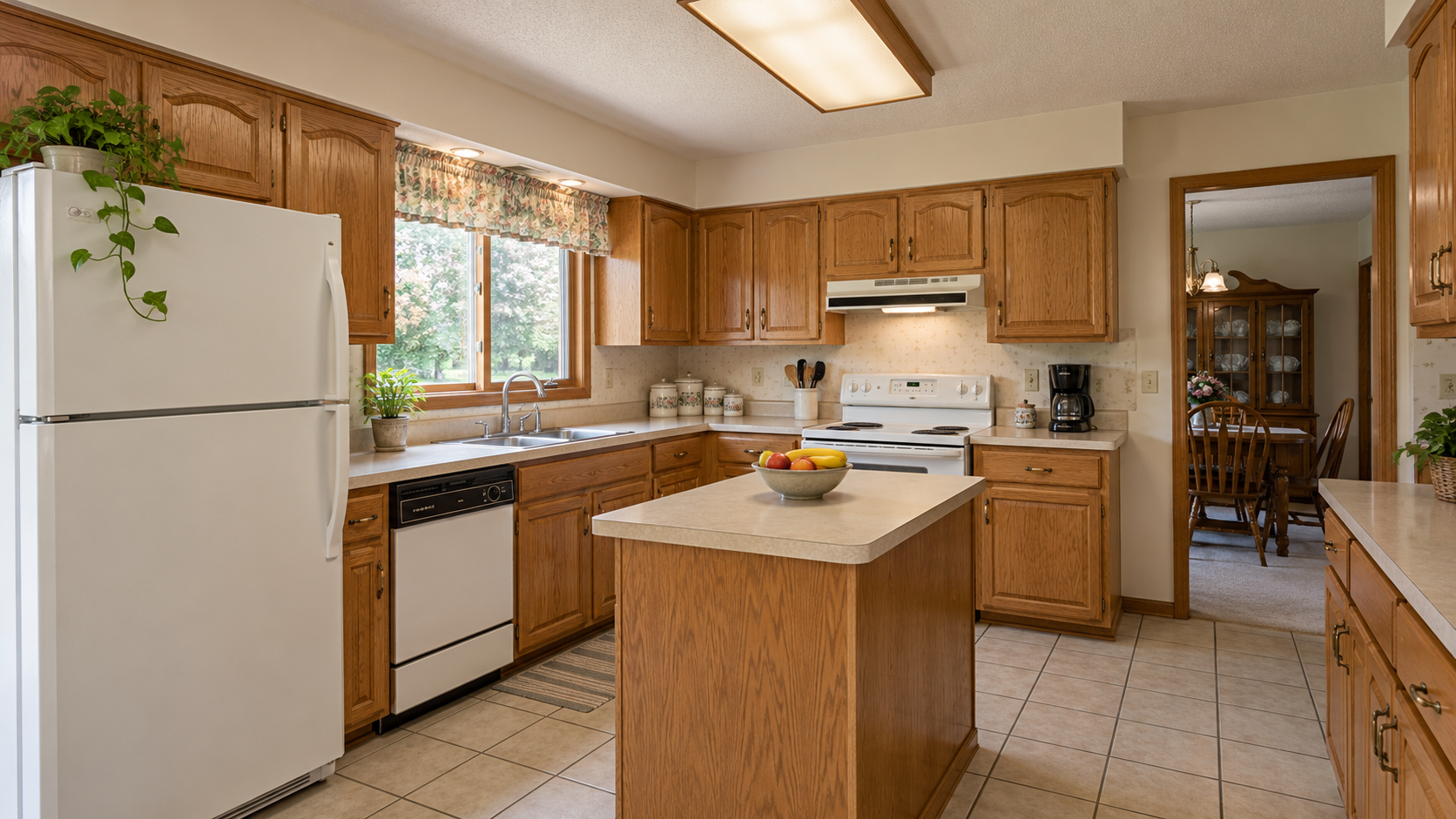
A fixer-upper is worth it when the price gap to a renovated home is bigger than your full project cost. That means contractor bids, permits, design fees, carrying costs, and a cushion for surprises. Get bids before you offer, and compare against a true move-in-ready home on a similar block.
Chicago’s North Shore Fixer-Upper or Move-In Ready?
Is a fixer-upper worth it on Chicago’s North Shore?
A fixer-upper on Chicago’s North Shore is worth it when the price gap between it and a renovated home is bigger than your full project cost. Full cost means contractor bids, permits, design fees, the months you carry two housing costs, and a cushion for surprises. If the gap is small, the move-in-ready home usually wins.
Key Takeaways
- Recent local market data put Evanston's median sale price at $470,000 across 239 sales in about 90 days, but that median mixes every condition, so it can't show you a fixer-upper discount.
- Contractor-reported 2026 planning ranges are $45,000 to $80,000 for a mid-range kitchen and $25,000 to $45,000 for a mid-range bathroom, which adds up to $70,000 to $125,000 for just those two rooms.
- Remodeling permits come from each suburb's own building department, not the City of Chicago, so the rules can differ between Evanston, Glenview, Wilmette, and the rest.
- A fixer-upper makes financial sense only when the price gap beats bids, permits, carrying costs, and a contingency added together.
- Over-improving for the block can erase the benefit of a renovation, so scope matters as much as price.
How big is the price gap between a fixer-upper and a renovated home?
Nobody can give you one honest number for that gap. The market reports I can point to show medians for whole areas. They don't split homes by condition, year built, lot size, or quality of renovation.
Here is the area-level picture from recent local market data (aggregated public listing data, trailing 90 days or so). These are medians for every kind of home that sold, so use them as context and not as a fixer-upper price.
| Area | Median Sale Price | Median Days on Market |
|---|---|---|
| Evanston | $470,000 | 36 |
| Skokie | $443,500 | 45 |
| Wilmette | $1,122,500 | 55 |
| Morton Grove | $485,000 | 42 |
| Glenview | $702,500 | 45 |
In Evanston, recent local market data show 109 active listings and 239 homes sold in roughly the last 90 days. That is a lot of choice to compare against. A local report using North Shore–Barrington Association of REALTORS® data put the June 2026 median for non-distressed Evanston properties at $450,000, up from $435,000 in June 2025. It put the wider North Shore and Barrington area at $750,000 with 1.32 months of inventory.
Those figures use different property definitions than the table above. Treat them as two views of the same market, not as one number to subtract from the other.
Why a median can't price your house
One thing I believe strongly about this area is that micro-location matters. Two older homes can sit a few blocks apart and trade very differently. The block, the noise, the lot, the floor plan, and the quality of past work all change the price.
So I don't price a fixer-upper off price per square foot or the three closest sales. I compare it to the move-in-ready home a buyer would pick instead. That comparison is the real gap. If you want me to pull it for a specific house, that is exactly what a consult is for.
What does it really cost to renovate an older home on Chicago’s North Shore?
It costs more than most buyers expect, because "renovation" is not one flat number. Price each project on its own, then add the costs that don't show up in a contractor's room estimate.
Kitchens and bathrooms
A North Shore contractor's 2026 remodeling cost guide reports about $45,000 to $80,000 for a mid-range kitchen and about $25,000 to $45,000 for a mid-range bathroom. These are contractor-reported planning figures, not government or MLS data. Your bids may land higher or lower.
Add those two ranges together and you get $70,000 to $125,000 for one kitchen and one bathroom. That leaves out structural repairs, additions, mechanical systems, design fees, temporary housing, financing, and contingency. The same guide is a starting point, not a quote.
What an inspection needs to cover on an older house
Older homes hide expensive problems. Before you make an offer, get an inspection and look hard at these:
- Roof and windows
- Foundation and drainage
- Electrical service
- Plumbing and the sewer connection
- Heating and cooling systems
- Insulation
- Any sign of water getting in
I don't have a trustworthy North Shore-wide dollar range for these items, and I won't make one up. Ask local contractors to bid on what the inspector flags. Those bids are the numbers that count.
Permits are local, so check the suburb
Remodeling permits on Chicago’s North Shore come from the suburb's own building department, not the City of Chicago. A local remodeling guide notes that requirements, fees, plan review, inspections, and approval times can differ among Evanston, Glenview, Wilmette, Winnetka, Glencoe, Highland Park, Northbrook, and other suburbs.
The same source lists structural work, plumbing, electrical, HVAC, and changes to decks, windows, or doors as common permit triggers. Rules vary by project, so confirm yours with the municipality before you count on a start date. I haven't listed fees or timelines here because those should come straight from the building department.
The costs that sneak in
Use this table to build your own full-cost number. The right-hand column tells you where each figure should come from.
| Cost line | Where the number comes from |
|---|---|
| Renovation scope | Written bids from local contractors |
| Permits and plan review | The suburb's building department |
| Design or architect fees | Your designer or architect |
| Temporary housing or double housing costs | Your own rent or mortgage and the project schedule |
| Financing costs | Your lender |
| Contingency for surprises | Your contractor, after the inspection |
Cash needs can climb fast with a project like this. My post on how much cash you need to buy a home in Chicago is a good place to start, and your lender can tell you how renovation costs fit into your loan.
When does a fixer-upper make financial sense on Chicago’s North Shore?
It makes sense when the price gap is clearly larger than your total project cost, and when you can live with the timeline. Here is the test I use with buyers.
- Find the move-in-ready comparison. Pick a renovated home you would happily buy instead, on a similar kind of block.
- Price the fixer-upper's real scope. Use written bids, not guesses.
- Add permits, design, carrying costs, and contingency. Use the table above.
- Compare totals. If the fixer-upper isn't cheaper by a meaningful margin, the risk isn't paying you.
Don't over-improve for the block
This is where buyers lose money. A top-of-the-line kitchen in a home on a block where buyers pay for something simpler won't come back dollar for dollar. Spend where the house needs it and where buyers will notice. Skip the rest.
Time and stress count too
A renovation takes months, and the schedule depends on scope, permit review, and your contractor's calendar. Ask for a written schedule before you buy. If you are selling one home while buying another, the timing gets tighter, and rates change the math too. My post on how interest rates change the math on upsizing in Chicago walks through that.
A fixer-upper also changes how you shop. Get your financing lined up before you tour, as I explain in Before Touring Homes in Chicago, Get Pre-Approved. I like solving logistics puzzles like this, and I enjoy explaining each step so you can make the call yourself.
Not sure whether a specific house is a bargain or a trap? Book a free consult and we'll run the numbers together.
Curious how I work with clients? You can read my reviews on Google, Zillow, and Realtor.com.
FAQ
Is buying a fixer-upper in Evanston cheaper than buying a renovated home?
The purchase price is often lower, but the total cost after renovation can end up equal to or higher than a renovated home. Evanston's recent median sale price is $470,000, though that figure covers every condition. Compare the fixer-upper's price plus full project cost to a move-in-ready home you would actually buy.
How much does it cost to remodel a kitchen on Chicago’s North Shore?
A North Shore contractor's 2026 guide reports about $45,000 to $80,000 for a mid-range kitchen. That is a planning figure, not a quote. Layout changes, new mechanicals, and design fees can push a real project higher, so get written bids.
What renovation projects require a permit on the North Shore?
Structural, plumbing, electrical, and HVAC work are common permit triggers, as are changes to decks, windows, or doors. Each suburb, including Wilmette, Winnetka, and Glenview, runs its own building department with its own rules. Confirm your exact project with the municipality before work starts.
Can renovation costs exceed the price difference between a fixer-upper and a renovated home?
Yes, and it happens often when buyers price only the visible work. A kitchen and bathroom alone can reach $70,000 to $125,000 using contractor-reported mid-range figures. Hidden problems, permits, design fees, and carrying costs come on top of that.
How much renovation contingency should I budget for an older home?
Set the number with your contractor after the inspection, because it depends on what the inspector finds. More unknowns, such as old wiring, drainage issues, or signs of water, call for a bigger cushion. I can't give you one fixed number that fits every house.
Here is the bottom line. A fixer-upper on Chicago’s North Shore can be a smart move, but only when the math works after every cost is counted. I help buyers test that math before they offer, so the decision feels clear and not rushed. When you're ready, schedule a free no-obligation consult. If you own a home and are weighing a sale first, get a free home valuation.
Equal Housing Opportunity. Stephanie Sullivan holds a Managing Broker License in Illinois and the RENE, SRS, and ABR designations, and is regulated by the Illinois Department of Financial and Professional Regulation. This article is general information, not legal, tax, or financial advice. Confirm your own numbers with your closing agent, tax advisor, or lender.
Check out this article next